
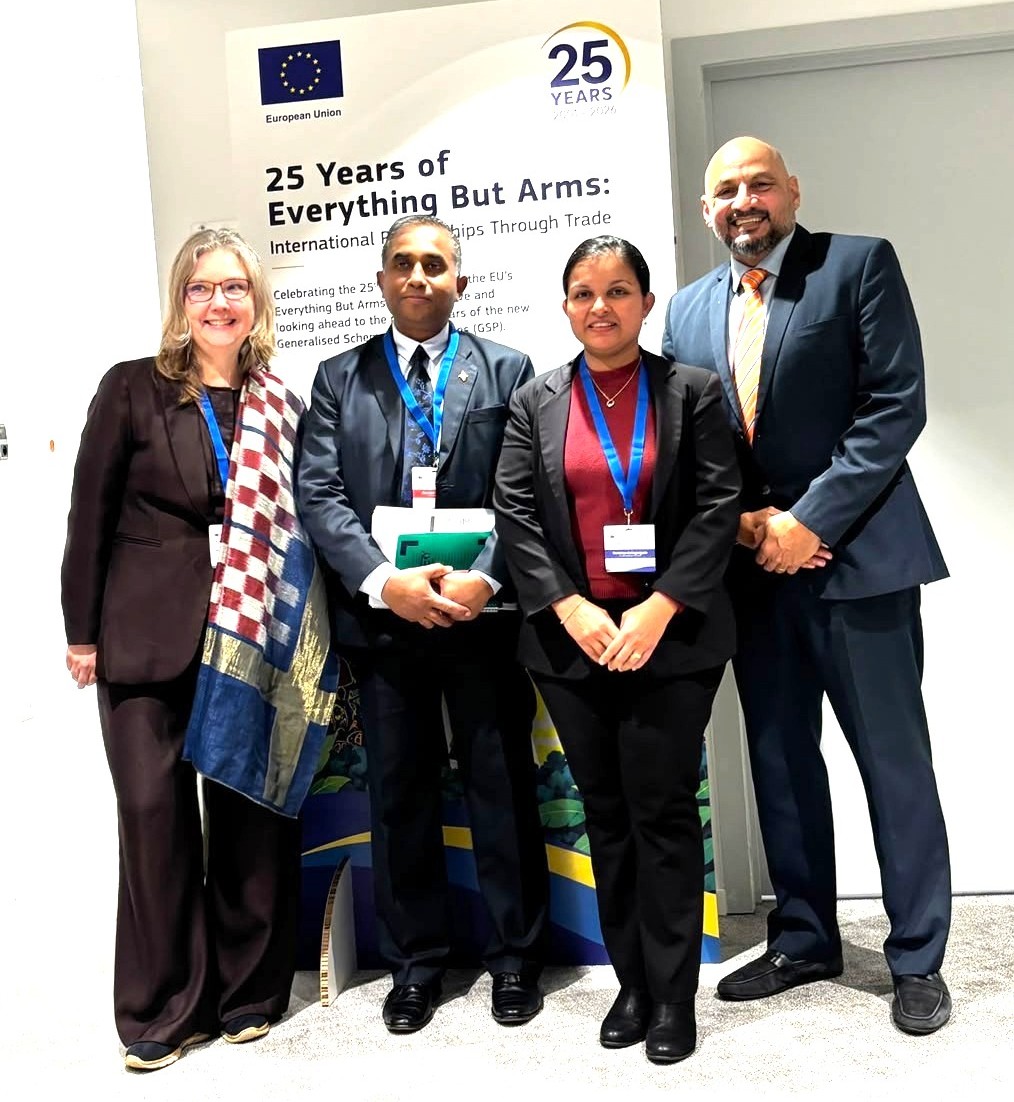
Sri Lanka was well represented at a high-level conference hosted by the European Commission on 4 November 2026 in Brussels, where the country’s apparel industry was highlighted. The event marked the 25th anniversary of the European Union’s Everything But Arms (EBA) arrangement and introduced the new EU Generalised Scheme of Preferences (GSP), providing an opportunity to discuss the EU’s trade preferences for developing countries and Least Developed Countries (LDCs).
For 25 years, the EU’s EBA arrangement has provided LDCs with duty-free and quota-free access to the EU market for all products except arms and ammunition. From 1 January 2027, the revised EU GSP will renew the EU’s preferential trade framework and provide continued support to LDCs. All GSP+ beneficiaries, including Sri Lanka, must reapply for GSP+ under the new cycle before 31 December 2028. Discussions explored how the EBA and GSP schemes could continue to support developing countries through trade opportunities while strengthening international partnerships, investment and sustainable economic growth.
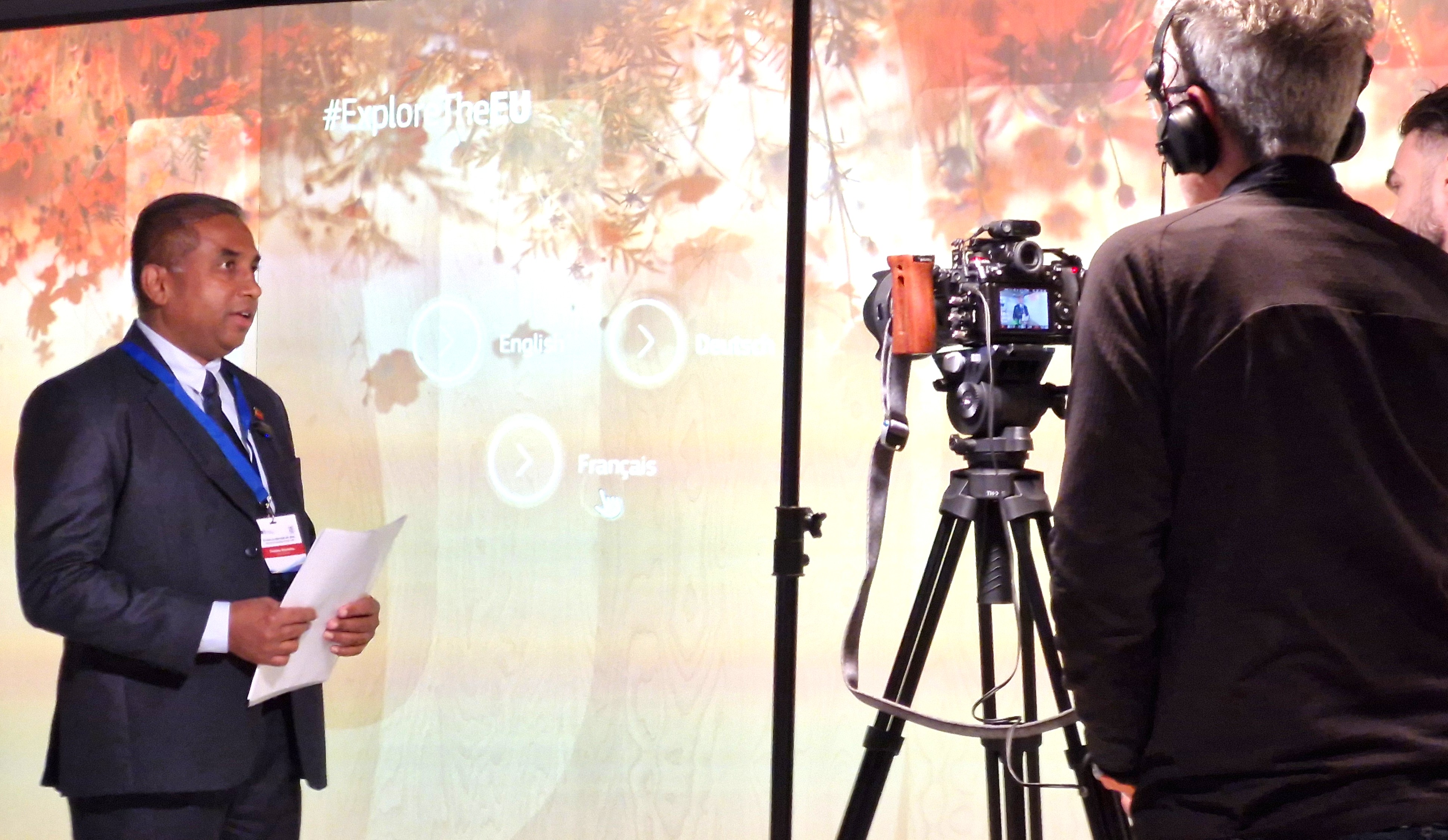
Representing Sri Lanka’s Mission to the European Union in Brussels, Ambassador Chandana Weerasena and Minister (Commercial) Thavishya Mullegamgoda participated in the conference. The Ambassador also participated in an interview conducted by the Directorate-General for Trade of the European Commission, explaining the significance of the event to Sri Lanka and highlighting the opportunities offered by the renewed EU GSP scheme. He noted that Europe remained one of Sri Lanka’s main export destinations. As a beneficiary of the EU GSP+ scheme, Sri Lanka had benefited significantly through enhanced export competitiveness, the promotion of export-oriented industries, increased investment in export-focused sectors and integration into global supply and value chains. These benefits had also contributed to employment generation and improved livelihoods, particularly among vulnerable communities and women.
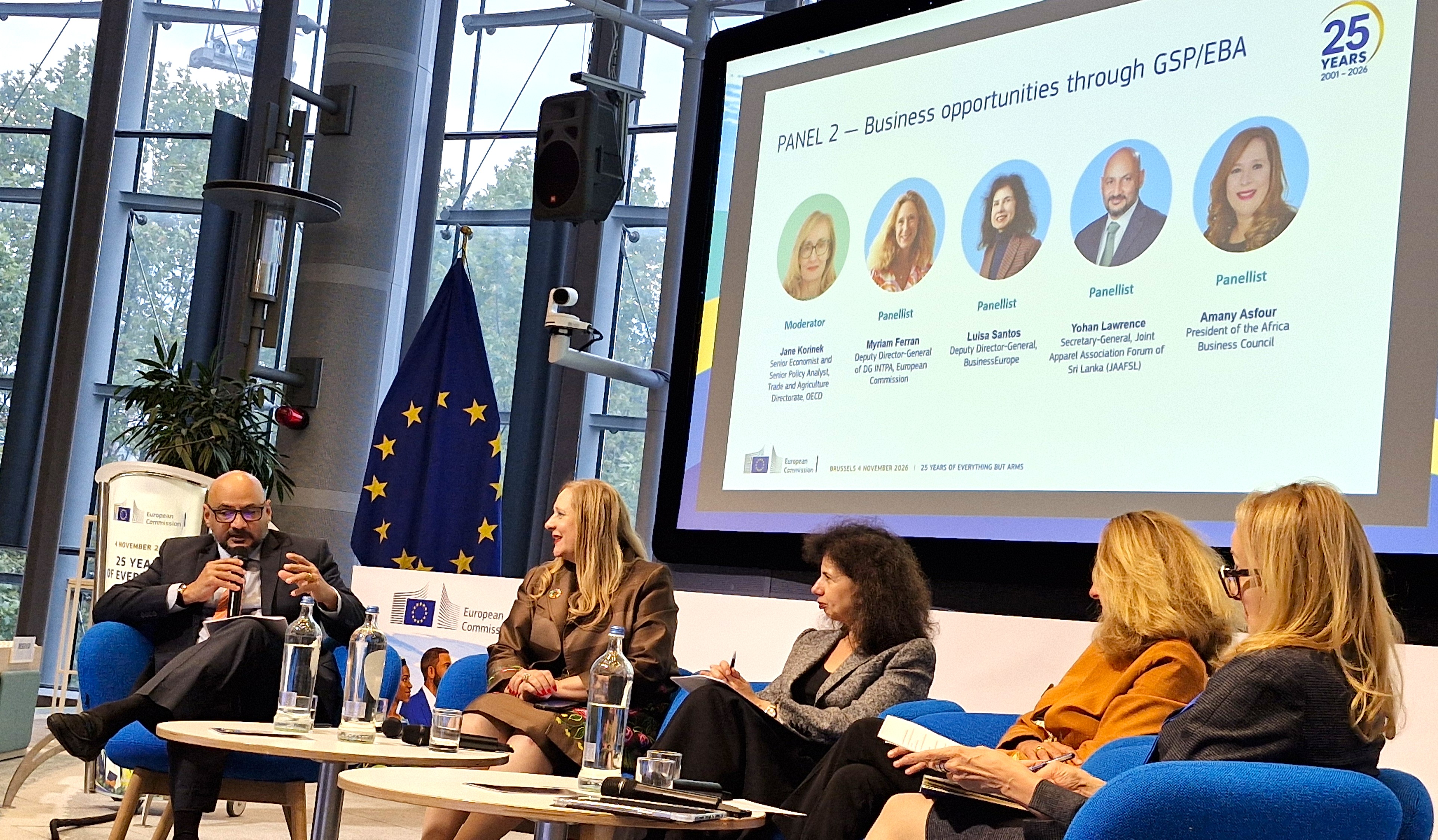
A key highlight for Sri Lanka was the participation of Secretary-General of the Joint Apparel Association Forum of Sri Lanka, Yohan Lawrence, as a panellist in the discussion titled “Business Opportunities through GSP/EBA”. His participation provided an opportunity to present the perspective of Sri Lanka’s apparel industry on market access, export opportunities, sustainable industry development, compliance with EU regulations and future trade partnerships with the European Union. Apparel remained Sri Lanka’s leading merchandise export sector to the European market, and the discussion highlighted the positive contribution of EU GSP trade preferences to the industry and the livelihoods of hundreds of thousands of people in Sri Lanka. During the discussion, Ambassador Weerasena requested the Directorate-General for International Partnerships (DG INTPA) to organise an Investment Forum in Sri Lanka with the participation of European investors. The initiative aimed to expand export-oriented manufacturing, promote export diversification across the country and increase the utilisation of GSP+ benefits.
The panel examined how predictable market access through the GSP and EBA arrangements could support exporters, investors and value-chain development, particularly small and medium-sized enterprises (SMEs) and women-owned and women-managed businesses. The discussion also highlighted the importance of trade preferences in strengthening business competitiveness and creating opportunities for companies in developing countries to access international markets.
Apparel remained Sri Lanka’s largest merchandise export sector, generating approximately US$ 5 billion annually and accounting for over 40% of total merchandise exports. Fabric and textiles contributed approximately US$ 522 million. The European Union accounted for slightly over 30% of Sri Lanka’s apparel exports. During the first half of 2026, Sri Lanka exported US$ 705 million worth of apparel to the EU, largely benefiting from GSP+ trade preferences. Sri Lanka will continue to enjoy GSP+ benefits during the transitional period from 1 January 2027 to 31 December 2028 and remains committed to reapplying for the EU GSP+ scheme under the new GSP regulation to ensure continuity of this important trade preference.
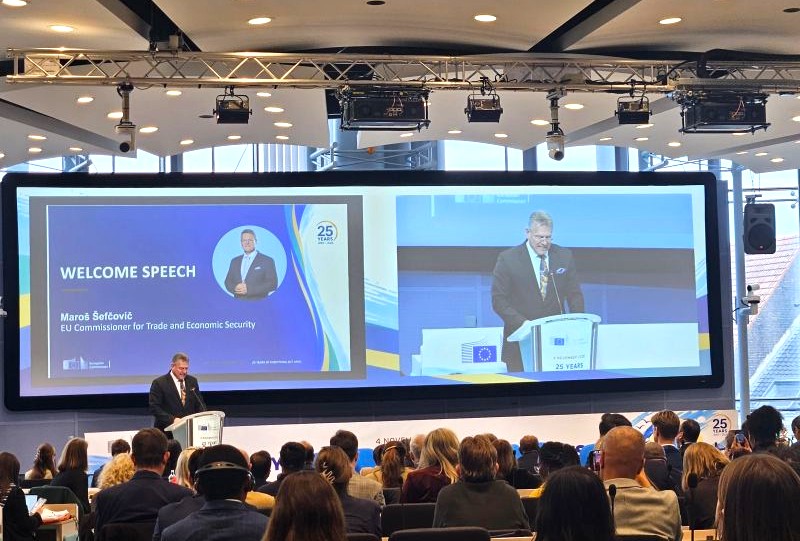
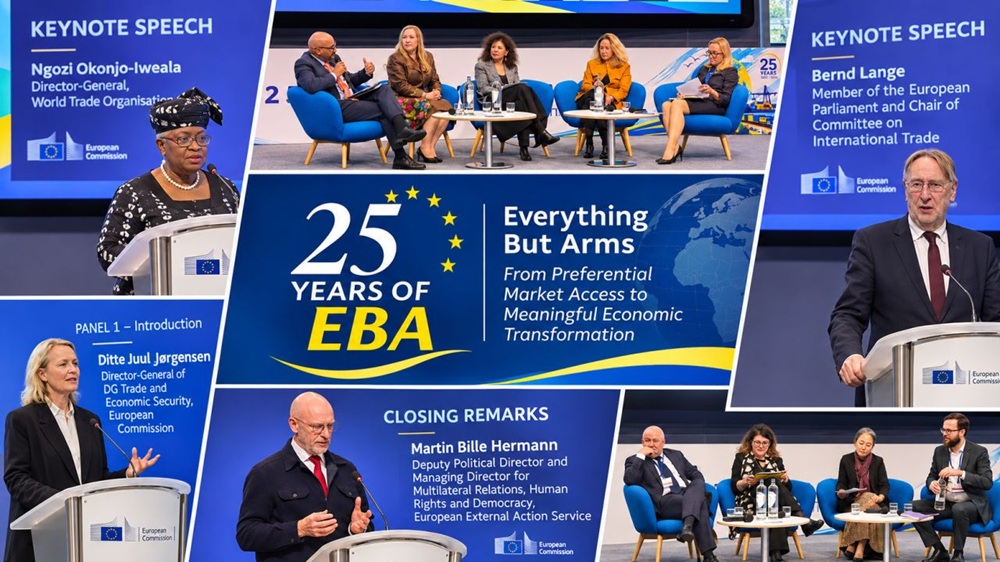
The conference, held on 4 November 2026 in Brussels, featured keynote speeches by European Commissioner for Trade and Economic Security, Maroš Šefčovič; Director-General of the World Trade Organization, Ngozi Okonjo-Iweala; and Chair of the European Parliament’s Committee on International Trade, Bernd Lange. It brought together representatives of the European Union, partner countries, international and regional organisations, businesses, social partners, civil society, academia and other stakeholders.
Four key messages emerged from the conference: predictability remained essential for investment and trade; non-tariff barriers, including rules of origin, certification and regulatory compliance, increasingly determined effective market access; EU GSP and the EU Global Gateway needed closer coordination to strengthen productive capacity and local value addition; and success extended beyond export volumes to include decent employment, SME participation and economic diversification. The conference also highlighted the importance of continued dialogue between policymakers and the private sector in identifying opportunities, addressing trade-related challenges and strengthening mutually beneficial economic partnerships.
Embassy of Sri Lanka
Brussels
10 November 2026