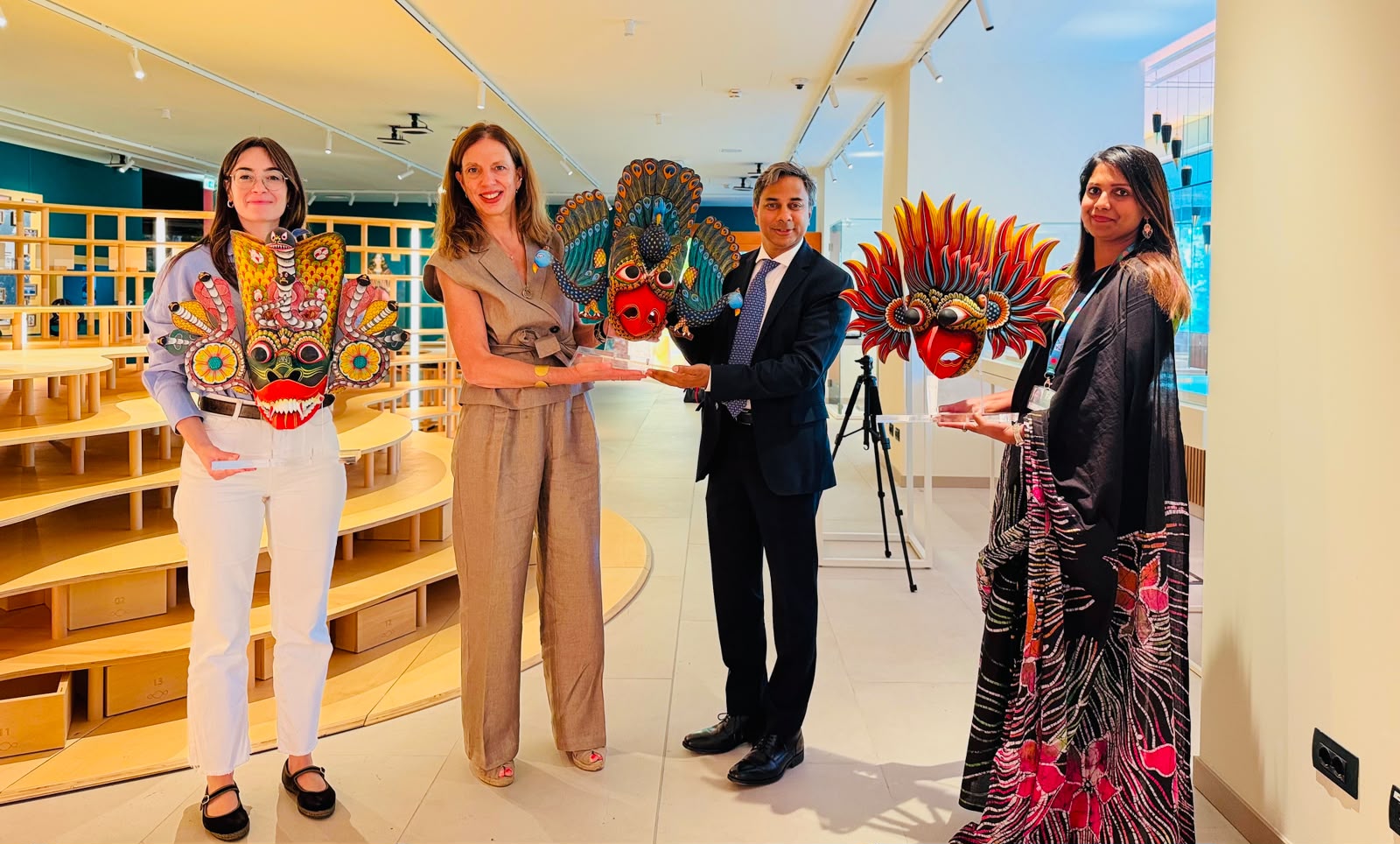
A gift in support of cultural heritage preservation
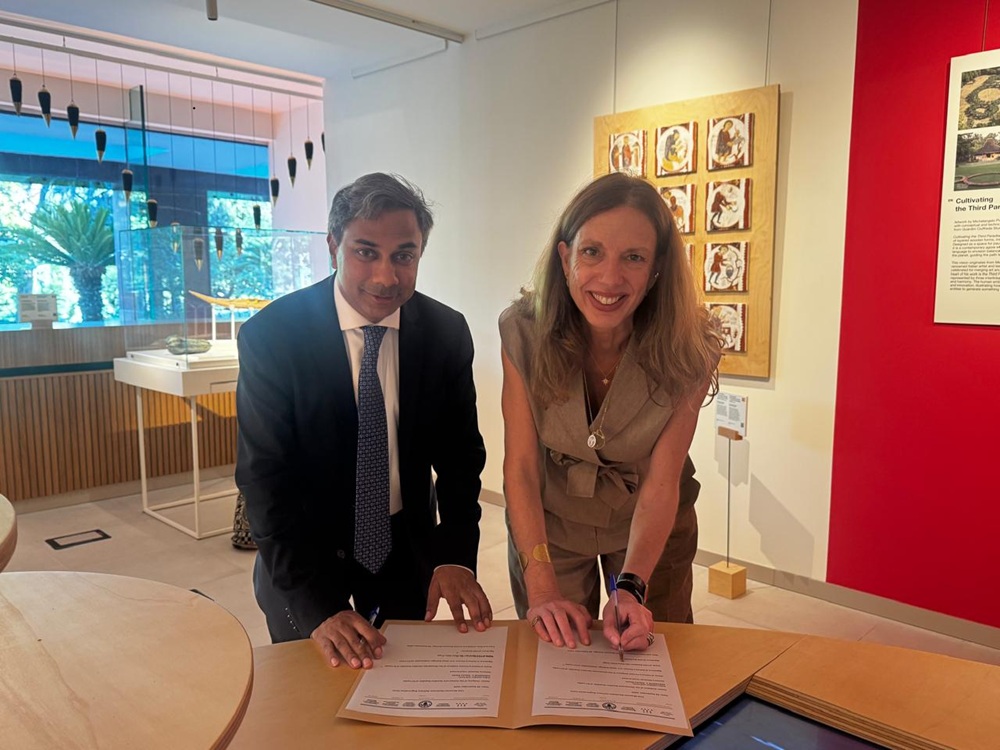
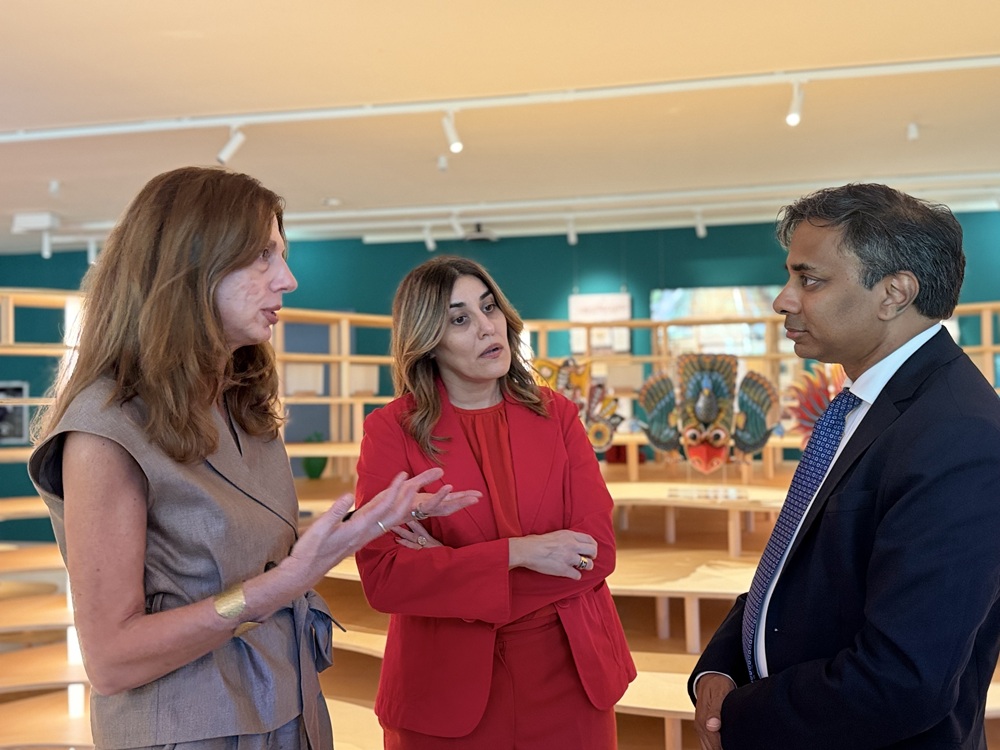
On the occasion of the first anniversary of the FAO Museum at the headquarters of the Food and Agriculture Organization of the United Nations (FAO) in Rome, the Embassy of Sri Lanka donated three traditional wooden Raksha masks to the Museum on 16 October 2026. The donation was made in collaboration with the Sri Lanka Tourism Promotion Bureau (SLTPB) and the National Craft Council (NCC) of Sri Lanka.
Mask making is one of Sri Lanka’s distinctive folk-art traditions, rooted in ritual, storytelling and community ceremonies. Passed down through generations, the craft features vibrant colours, intricate carvings and rich symbolism. The masks also hold significance in traditional agrarian rituals, where they were believed to protect crops from disease, drought and pests.
The three masks donated were the Cobra Demon Mask (Naga Raksha), the Peacock Demon Mask (Mayura Raksha) and the Fire Demon Mask (Ginidal Raksha). The cobra mask represents protection, fertility, wisdom and guardianship, reflecting the traditional association of snakes with water resources, rainfall and agricultural fertility. The peacock mask symbolises beauty, prosperity and good fortune, highlighting the relationship between wildlife, farming landscapes and agricultural biodiversity. The fire mask, characterised by flame-like carvings, represents the power of fire to ward off evil and purify, while recalling the traditional practice of clearing fields before cultivation and symbolising renewal and the beginning of a new farming season.
The masks were crafted by master craftsman R. M. L. Ravindra of Ambalangoda, a second-generation practitioner of the traditional art of mask making in his family.
The donation was accompanied by a video message highlighting the importance of preserving cultural heritage. The video featured the Ambassador of Sri Lanka and Permanent Representative to the FAO, Satya Rodrigo; the Head of Outreach and Promotions at the FAO, Clara Velez Fraga; and the Director-General of the International Centre for the Study of the Preservation and Restoration of Cultural Property (ICCROM), Aruna Francesca Maria Gujral.
The donation reflected Sri Lanka’s longstanding partnership with the FAO and its commitment to sharing its agrarian heritage and cultural traditions with the international community. Through this contribution, the Embassy sought to offer visitors from around the world an insight into the deep connections between nature, ritual and farming in Sri Lankan life.
Embassy of Sri Lanka
Rome
16 October 2026